Pania's Design Portfolio

GROUP FOOD VOTING APP

How TopPlate Achieved a Seamless Food Voting Experience in Just One Month

Company

TopPlate

Role

Lead UI/UX Designer

Responsibilities

End-to-end design, user research

Summary

User Engagement
↑ 0 %
Positive Feedback
0 %
User Retention
0 %
Development Efficiency
↑ 0 %

In just one month, I led the design and development of TopPlate, a food-based app where users vote on food options to decide their meals. Despite limited resources and tight deadlines, we delivered an MVP that exceeded stakeholder expectations and delighted initial beta users, showcasing the power of rapid, user-focused design.

Problem

To design an engaging, intuitive interface under significant time constraints with minimal prior research.

Goals

  • User Engagement: Design an intuitive interface that encourages frequent use.
  • Seamless Onboarding: Ensure new users can start voting quickly and easily.
  • Scalability: Develop a web-based solution to facilitate simultaneous deployment on iOS and Android.
  • Cost Efficiency: Minimize development and operational costs.
  • User Satisfaction: Achieve high user satisfaction and positive feedback from beta users.

Hurdles

  • Time constraints: Only one month to deliver the MVP.
  • Limited research: Lack of preliminary user research.
  • Small team: Balancing multiple roles and responsibilities.
  • Passion project: Equity-based compensation led to irregular working hours.

Process

Our strategy was to design rapidly, enabling quick testing and iteration.

Steps

  • Scope Project: Discussed timeline, target demographic, and possibilities with CEO and engineers
  • Research: The team made it clear they wanted to draw inspiration from Kahoot, Tinder, and Yelp, so I made sure to explore each of those further
  •  User Flow: This basic flow needed early verification with the engineers
  • Sketches: Quickly designed 3 main screens for team verification
  • Reviews: Occurred early and frequently throughout the project, serving as a way to ensure my understanding of the brand, company, and project
  • Color Palette: Before my co-designer joined the project, I established the color palette to move forward with Hifis
  • Branding: My co-designer deserves credit for ensuring the app’s cohesive and engaging look and feel aligned with our target audience. I collaborated with her to verify all of this. Check out TopPlate Branding Project →
  • HiFi: Create prototype main screens and demo for the team
  • Feasibility Check: Met with engineers to review any new requirements accompanying prototypes
  • Testing: Once the designs were handed off, the focus shifted to bug testing and inspecting the app against the designs

Solution

The MVP focused on quick user onboarding and clear group and user identification for voting. Key features included:

user Types

Group creators and voters.

Information Display

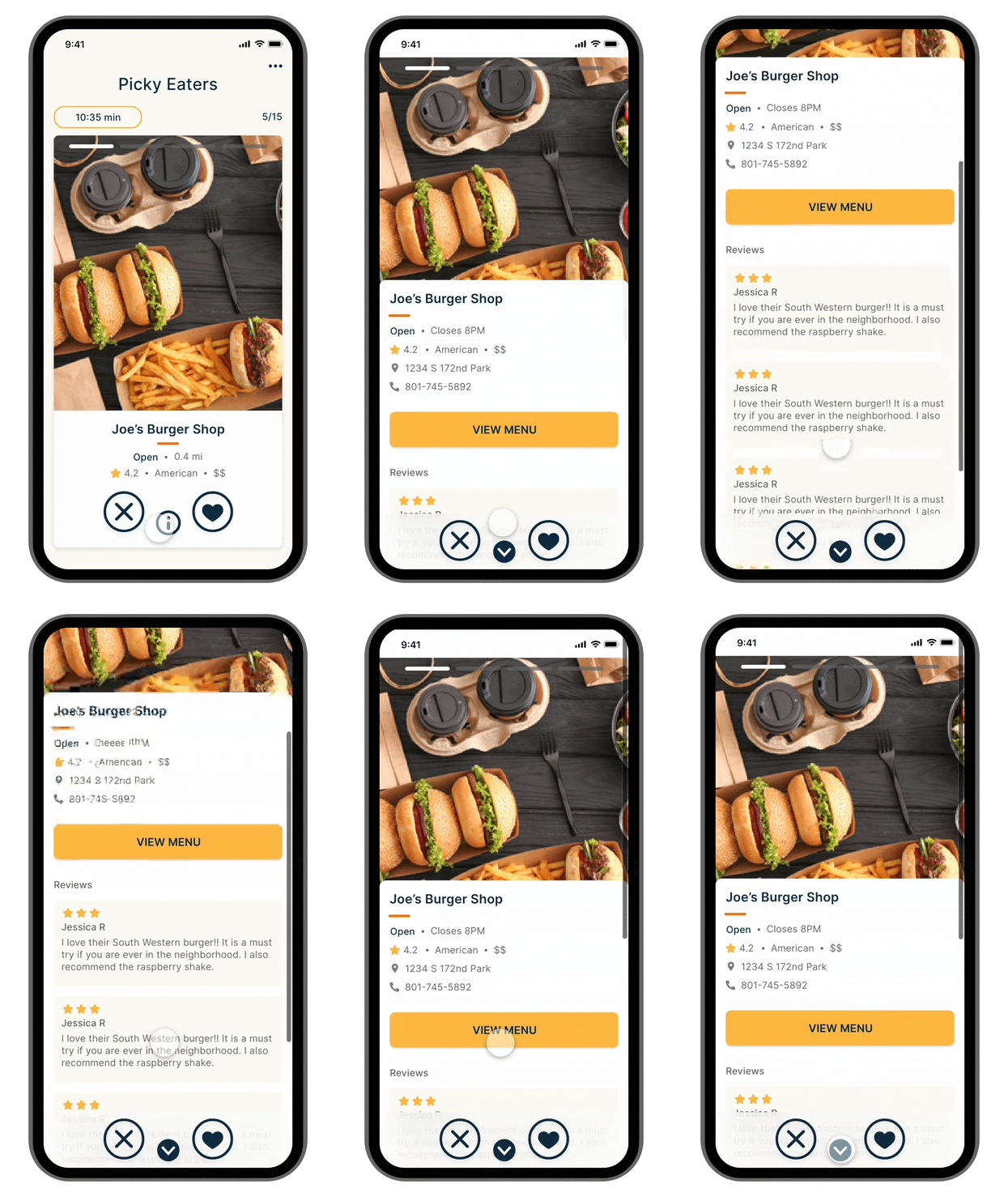
Food details, reviews, locations, ratings, and contact info.

Voting Mechanism

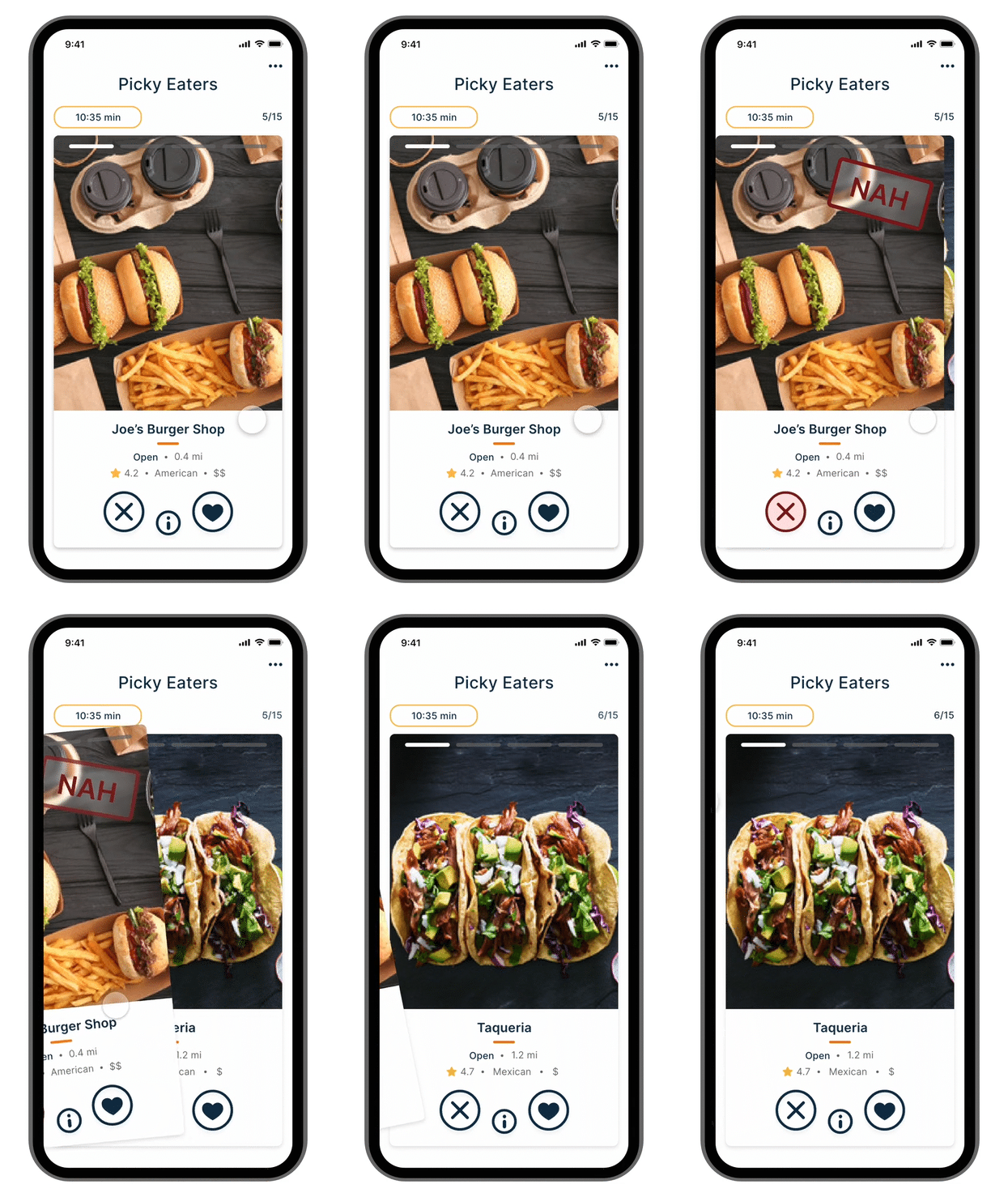
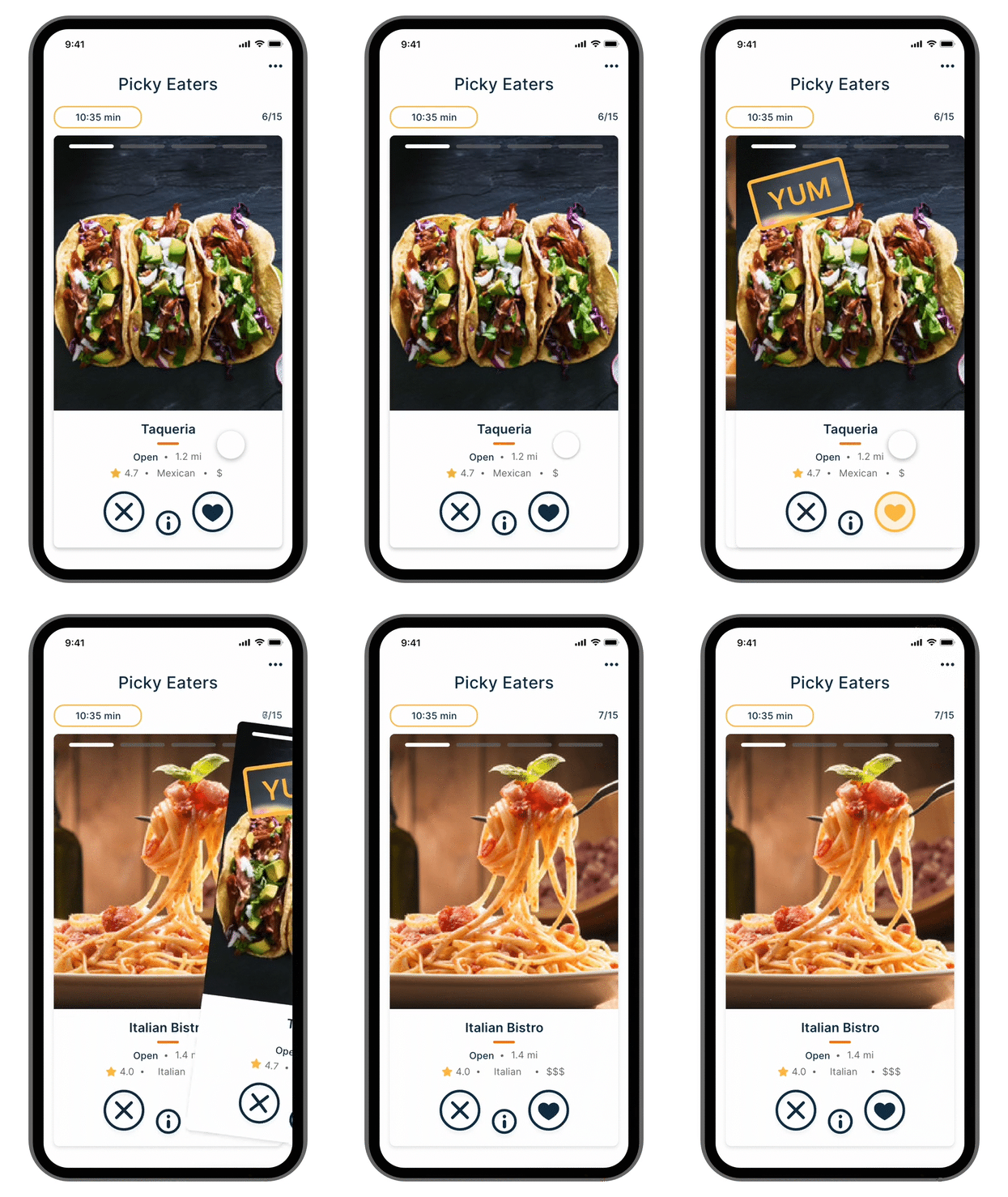
Swipe-based voting with a final tally to determine the top plate.

Impact

The MVP’s clean interface and thoughtful design resonated well with initial beta users.

Increased user engagement

We achieved a 30% increase in user activity compared to initial projections.

POsitive user feedback

95% of beta users rated the app as “easy to use.”

Increased User Retention

80% of users continued to engage with the app after the first month.

increased development efficiency

We saved 20% development time due to streamlined design processes.

Conclusion

Our effort to craft a user-centric design process transformed limitations into insights, enriching our team’s approach with empathy and innovation.

Reflection

  • Importance of Research: In hindsight, I would prioritize even a brief user research phase to gather initial insights and validate assumptions early on.
  • Time Management: Working under tight deadlines reinforced the importance of efficient time management and prioritization. More structured sprint planning could have further optimized our workflow.
  • Team Collaboration: The project’s success highlighted the value of close collaboration with cross-functional teams. Regular check-ins and transparent communication were vital to overcoming challenges.
  • Adaptability: Being flexible and open to feedback allowed us to iterate quickly and improve the product continuously. Embracing change and being willing to pivot based on user feedback is crucial.

Next Steps

We gathered user feedback, conducted extensive testing for bugs, and iterated on the design. Our future roadmap included enhancing features based on user input and expanding the app’s capabilities.

future features

  • Advanced Filtering: Allowing users to filter food options based on dietary preferences and allergies.
  • Social Integration: Enabling users to share their voting experiences on social media platforms.
  • Gamification Elements: Introducing rewards for frequent users and top contributors.
  • Monetization Strategies: Introducing ads for revenue generation and offering restaurants paid opportunities to secure top spots or special badges.

Our "Super-Specific Who"

Young adults, 18–35, deeply embedded in music fandom communities.

The journey to understanding this audience—unraveling their unique needs, preferences, and challenges—was an essential precursor to our research and design efforts. For an in-depth dive into how we sculpted our target audience profile and why they’re pivotal to our project’s success, checkout the link below. This background sets the stage for our user research, guiding our approach to interviews and analysis with a clear vision of whom we’re designing for.